
For most RV owners, Heated RV Water Hose, 30 ft is the best heated water hose for rv because its 30-foot reach fits many campsite hookups without an extra connector. Its built-in heating design helps keep water moving in freezing conditions, while the familiar hose length remains practical for setup and storage. That balance makes it a sensible first choice for full-time travelers, seasonal campers, and anyone who parks where overnight temperatures can drop below freezing.
This guide is for RV owners who need a reliable water line during cold-weather camping. Focus first on hose length and cold-weather performance, then check the hose material, fittings, thermostat controls, and power-cord layout. A 25-foot model may pack smaller, but a 30-foot option gives more placement flexibility around crowded hookups. The 7 picks below are ranked with clear reasons and honest drawbacks for each, so you can compare setup needs before choosing a heated hose for your rig.
Quick Comparison
| # | Product | Best For | Price | |
|---|---|---|---|---|
| 1 | Heated RV Water Hose, 30 ft | Long Winter Campsite Connections | ~$90 | View → |
| 2 | Heated RV Water Hose | Cold-Weather RV Hookups | ~$130 | View → |
| 3 | Camco Heated Water Hose for RV | Camco Brand Loyalists | ~$118 | View → |
| 4 | Heated Water Hose | Freeze-Prone Outdoor Spigots | ~$90 | View → |
| 5 | 4.0 Upgraded Heated Water Hose for RVs | RV Owners Wanting Upgrades | ~$130 | View → |
| 6 | OEBLD Heated Water Hose, 30FT | Campers Needing 30-Foot Reach | ~$73 | View → |
| 7 | RVGUARD Heated Water Hose 25FT | Short-Distance Winter Hookups | ~$60 | View → |
7 Heated RV Hoses Worth Considering
The seven RV heated hoses are ranked from lower-cost options to the top pick, based on features and stated specifications.
7. RVGUARD Heated Water Hose 25FT

Best for: Winter RV hookups and garden use
This 25-foot heated water hose is made for RV sites, homes, gardens, and other outdoor water connections during freezing weather. Its built-in thermostat switches heating on at about 47°F and off near 60°F. The 7-watt-per-foot cable provides freeze protection down to -20°F, with automatic cycling to limit unnecessary heating.
The hose uses five layers, a wear-resistant PVC outer jacket, and stainless steel connectors to help resist leaks, weather, and handling damage. Its water-contact materials are lead-free and BPA-free, making it suitable for drinking-water connections. A 3/4-inch GHT adapter fits standard US water supplies, and either end can connect to the source. At around $60, it costs more than a standard hose, but it avoids separate heat tape or manual wrapping.
Pros
- Automatic thermostat control turns heating on near 47°F and off around 60°F.
- Five-layer construction and stainless steel connectors help prevent leaks.
- Lead-free and BPA-free materials suit drinking-water use.
Cons
- It needs a nearby electrical outlet, and its 7-watt-per-foot cable can draw about 175 watts while heating.
- The fixed 25-foot length may not fit every hookup, especially compact RV setups or distant water sources.
6. OEBLD Heated Water Hose, 30FT

Best for: Winter RV hookups in freezing climates
The OEBLD Heated Water Hose measures 30 feet long and has a 5/8-inch inner diameter. It connects to standard 3/4-inch garden hose thread fittings, making it suitable for RVs, campers, and travel trailers. Around $73, it costs more than a basic drinking-water hose, but it adds built-in freeze protection for cold-weather camping.
A thermostat switches the heater on at 47°F and off at 60°F. The hose is rated for temperatures as low as -45°F, though actual protection depends on power and outdoor conditions. Its PVC-coated polyester braid helps resist abrasion, sunlight, and cracking. A sealed thermostat, LED status light, rubber gaskets, and sealing tape help limit leaks. The hose uses BPA-free, lead-free materials and carries a three-year warranty. It also lists UL62368-1, SGS, and FCC certifications.
Pros
- Automatic heating reduces the risk of frozen water lines in severe cold.
- The 30-foot length reaches many campground water hookups without an extension.
- A braided PVC-coated outer layer protects against abrasion and low-temperature damage.
Cons
- It needs a nearby electrical outlet, so it cannot protect water during a power outage.
- The 30-foot length adds weight and storage bulk compared with a standard hose.
5. 4.0 Upgraded Heated Water Hose for RVs

Best for: Winter RV hookups below freezing
This 50-foot heated water hose is designed for RV connections, outdoor faucets, gardens, and camping setups. It uses a food-grade, lead-free, BPA-free hose and includes fittings intended for standard American RV and garden-hose connections. The listed size options include 20, 30, 50, 75, and 90 feet, so buyers can choose a length that limits extra loops around the campsite. At around $130, it costs much more than a standard drinking-water hose.
Its main advantage is freeze protection without adding antifreeze to the water supply. The built-in temperature control adjusts heat output based on surrounding conditions, with the manufacturer rating protection down to -45°F. That figure is useful for severe winter weather, though actual performance depends on power, installation, and exposure. Overload protection helps reduce overheating risk. The hose also uses compression fittings to limit leaks and includes two rolls of thread-sealing tape. A three-year warranty adds some coverage for connection or heating problems, but buyers should confirm the exact length and fitting style before ordering.
Pros
- Heated design helps keep RV water lines open in freezing weather.
- Food-grade, lead-free, BPA-free hose suits drinking-water connections.
- Includes RV fittings and two rolls of sealing tape.
Cons
- Requires a reliable electrical outlet, so it will not protect water during a power outage.
- The roughly $130 price is high compared with an unheated drinking-water hose.
4. Heated Water Hose
Best for: RV owners in freezing climates
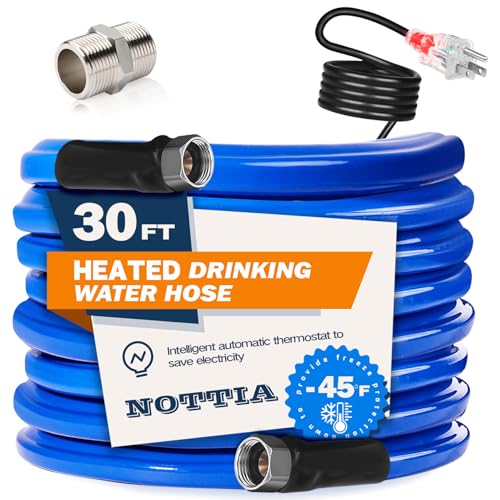
This 30-foot heated water hose is designed to keep water moving in cold weather, with freeze protection rated to -45°F. A self-regulating external thermostat adjusts heat output as temperatures change, so the hose does not run at full power constantly. It suits RV hookups, camping sites, gardens, homes, and livestock areas where exposed water lines can freeze.
The hose uses lead-free, BPA-free material intended for potable water use. It also includes overload protection, which may reduce overheating risks, though proper installation still matters. The manufacturer says the hose went through multiple development versions and offers three years of service support, plus 24/7 customer assistance. At around $90, it costs much more than a standard 30-foot garden hose. You also need access to an electrical outlet, and the 30-foot length may not reach distant spigots or RV connections. The -45°F rating is a manufacturer claim, not a guarantee for every setup or wind condition.
Pros
- 30 feet provides useful reach for many RV hookups and outdoor faucets.
- Lead-free and BPA-free construction suits drinking-water applications.
- Automatic heat control and overload protection reduce manual monitoring.
Cons
- Requires continuous electrical access during freezing weather.
- Around $90 costs considerably more than an unheated hose, while the fixed 30-foot length limits placement.
3. Camco Heated Water Hose for RV

Best for: Cold-weather RV hookups and campsites
The Camco 25-foot Heated Water Hose keeps potable water moving in freezing weather. Its 5/8-inch inner diameter fits common RV water connections, while the NSF/ANSI 61 certified hose is free of lead, BPA, and phthalates. Camco rates the freeze protection down to -20°F, or -28°C, making it useful for winter camping, livestock areas, and exposed outdoor faucets.
A thermostat-controlled heating cable runs from a 120-volt outlet and warms the hose only when needed. The 6-foot power cord has an LED indicator plug, so you can see when the hose is connected to power. A protective outer jacket and machined fittings help resist wear and corrosion. The hose is made in the USA with global materials and carries CSA lead-free certification under NSF/ANSI 372. At around $118, it costs much more than a standard drinking-water hose, but the built-in heating removes the need for separate heat tape.
Pros
- Protects the water line down to -20°F.
- Uses NSF/ANSI 61 materials without lead, BPA, or phthalates.
- Thermostat control limits heating to periods when warmth is needed.
Cons
- Requires a nearby 120-volt outlet, which may be difficult at primitive campsites.
- The fixed 25-foot length may not reach every RV spigot without an additional hose.
2. Heated RV Water Hose

Best for: Winter RV hookups and campsites
This 50-foot heated freshwater hose is designed for RV hookups, winter camping, gardens, and other outdoor water lines. Its electrical heating system is rated to keep water moving in temperatures down to -45°F. A self-regulating external thermostat adjusts heat as conditions change, rather than running at one fixed level. That setup may help thaw ice gradually and reduce frozen sections during severe cold. The 50-foot length gives you reach between a campsite water connection and an RV, though it also takes more room to coil and store.
The hose includes fittings and two washers at the ends to help limit leaks during setup. Installation still requires access to power, and the included instructions and videos may help first-time buyers. The outer jacket is intended to protect the heating system from weather and handling. The maker says the hose should not add a plastic taste or leach harmful elements into drinking water, but the listing does not identify the hose material or provide independent safety certification. At around $130, it costs much more than an ordinary freshwater hose. That premium may make sense for RV owners who camp through freezing weather.
Pros
- 50 feet provides useful reach from a water spigot to an RV.
- Self-regulating heat is rated for temperatures down to -45°F.
- Two end washers help reduce leaks during connection.
Cons
- It needs a nearby electrical outlet to provide freeze protection.
- The long heated design costs around $130 and takes more storage space.
1. Heated RV Water Hose, 30 ft

Best for: Winter RV hookups and outdoor water
This 30-foot heated water hose is designed for RVs, campsites, gardens, farms, and chicken coops. Its electric heating system aims to keep water moving in temperatures as low as -45°F. A self-regulating external thermostat adjusts heat as conditions change, so the hose does not need a separate manual temperature setting. The product is also offered in a 15-foot size, while this listing is for the 30-foot version. At around $90, it costs more than a standard drinking-water hose, but it targets a specific cold-weather problem.
The hose has a protective outer jacket around the heated line and includes two washers, one for each end, to help reduce leaks at the connections. Instructions and installation videos are included, which should make setup easier. The maker says the hose is designed to avoid plastic taste and harmful water contact, though buyers should still follow the cleaning and storage directions. A three-year service period is listed. The 30-foot length can also reach distant hookups without an extension hose, depending on the site layout.
Pros
- Self-regulating heat helps protect water flow in temperatures down to -45°F.
- A 30-foot length suits many RV hookups, gardens, and outdoor animal areas.
- Two included washers help reduce leaks at both hose connections.
Cons
- It needs a nearby electrical outlet, so it cannot work during power outages or without suitable outdoor power.
- The 30-foot version may be bulky to coil and store, especially in smaller RV compartments.
Buying Guide
The most important factor is an automatic thermostat with dependable freeze protection. It should turn on near 35°F and limit heating near 45 to 55°F, reducing freezing risk without excessive heat.
- Thermostat control: Choose a hose with automatic temperature regulation, not one that stays hot whenever it is plugged in. A built-in sensor should control the heating cable along the full length.
- Drinking-water safety: Look for NSF/ANSI 61 or equivalent potable-water approval, plus lead-free and BPA-free materials. This matters when the hose supplies your RV’s fresh-water tank.
- Length and diameter: Select 25 feet for close hookups, 50 feet for most campsites, or 75 feet for distant pedestals. A 5/8-inch inside diameter offers a useful balance of flow and portability.
- Power and weather protection: Confirm the voltage, wattage, and plug type before buying. A 120-volt model with a GFCI-compatible plug and weather-resistant connections fits most RV hookups. Avoid overloaded 15-amp circuits.
- Fittings and storage: Check for standard 3/4-inch garden-hose threads, reinforced strain relief, and included caps. Drain the line fully, then store it unpowered and loosely coiled. Typical prices range from $80 to $200.
If you cannot have everything, prioritize reliable thermostat control and verified potable-water materials.
Frequently Asked Questions
How does a heated RV water hose work?
A heated RV water hose uses built-in electrical heating to keep water from freezing in cold weather. Most models connect to a standard 120-volt outlet, then warm the line automatically as temperatures drop. Check the manual for operating limits, and use a GFCI-protected connection near the campground pedestal.
What temperature can an RV heated hose handle?
A heated RV hose typically protects its water line from freezing near 32°F, but its exact operating range depends on the model and weather exposure. Some units include insulation and thermostatic control, while others need manual switching. In temperatures below 0°F, add insulation around connectors and protect exposed fittings.
Can you leave a heated water hose connected overnight?
You can leave a heated water hose connected during freezing weather if its manual permits continuous use and the outlet has ground-fault protection. Keep both ends free of standing water, avoid coils or kinks, and unplug it when temperatures rise above freezing. A 25-foot hose is easier to manage than longer lengths.
Are heated RV hoses safe for drinking water?
Heated RV hoses are safe for drinking water only when the product is labeled for potable water and uses approved materials. Look for a drinking-water-safe listing, not just freeze protection. Flush the line before use, especially after storage, and replace it if the inner liner cracks, leaks, or develops an odor.
Conclusion
Heated RV Water Hose, 30 ft, is the top pick for RV owners who need extra reach for campground hookups and cold-weather camping. If your priority is easier storage rather than maximum reach, choose a shorter heated model that fits your usual site setup, since it takes less room in a storage compartment. Before buying, double-check the hose size, fitting compatibility, included quantity, and current price, because listings and package contents can change. Also confirm that the hose is rated for potable water and the temperatures you expect. A heated hose can help protect your water supply from freezing, but it still needs proper power, connections, and storage after use. Pick the length that fits your rig without excess slack.

