
MalloMe Sleeping Bags for Adults and Kids is the top pick for most buyers seeking the best backpacking sleeping bag for stomach sleepers. Its roomy rectangular shape gives stomach sleepers more space to shift their hips, knees, and shoulders than a narrow mummy bag. The design also suits camping trips where pack weight and extreme cold are not the main concerns. It is a practical choice for shoppers who want one versatile sleeping bag for different family members.
This guide is for campers who sleep face down and need room to move at night. Focus first on the bag’s shoulder and foot space, then check its packed weight, insulation, shell, and lining materials. A wider cut can improve comfort, but it may take up more room in a backpack. The four picks below are ranked with reasons and honest drawbacks for each.
Quick Comparison
| # | Product | Best For | Price | |
|---|---|---|---|---|
| 1 | MalloMe Sleeping Bags for Adults and Kids | Families Sharing One Tent | ~$26 | View → |
| 2 | ECOOPRO Warm Weather Sleeping Bag | Summer Camping Trips | ~$25 | View → |
| 3 | MalloMe Cold-Weather Sleeping Bag | Cold-Climate Outdoor Sleepers | ~$30 | View → |
| 4 | Adult Sleeping Bag | Solo Campers Seeking Extra Room | ~$24 | View → |
4 Top Sleeping Bags for Stomach Sleepers
These four backpacking sleeping bags are ranked from fourth place down to the top pick, based on comfort, shape, warmth, and pack size.
4. Adult Sleeping Bag

Best for: Tall campers on summer trips
This lightweight adult sleeping bag weighs 1.5 pounds and packs to about 7.9 inches, roughly the size of a soccer ball. Its 79-by-30-inch shape gives taller sleepers more footroom than many standard bags, with the maker recommending it for people under 6 feet 7 inches and 165 pounds. At around $24, it suits backpacking, car camping, motorcycle travel, and emergency storage without taking much space.
The 100gsm siliconized microfiber fill runs through the bag as one continuous piece, which should reduce shifting and cold spots after machine washing. Its stated comfort range is 50°F to 77°F, with a lower limit of 32°F when conditions are less comfortable. A two-way zipper opens from either side, and the auto-lock feature helps prevent unwanted opening during sleep. The reversible design comes in six solid colors, adding simple flexibility for camping or guest use.
Pros
- The 1.5-pound weight and 7.9-inch packed size save backpack space.
- The 79-inch length gives taller users extra room to stretch.
- Continuous microfiber fill is machine washable and less prone to clumping.
Cons
- The 50°F comfort rating makes it a poor choice for genuinely cold-weather camping.
- The 30-inch width and 165-pound recommendation may feel restrictive for broader sleepers.
3. MalloMe Cold-Weather Sleeping Bag

Best for: Budget summer car camping
The MalloMe sleeping bag is a lightweight option for camping, sleepovers, and mild-weather backpacking. It fits an adult up to 6 feet tall and weighs about 3 pounds, so it remains manageable in a hiking pack. Its listed temperature range is 50°F to 77°F, which suits spring, summer, fall, and cool indoor spaces better than winter trips.
The outer shell uses a waterproof hex-pattern fabric with two layers, S-shaped stitching, and synthetic fiber insulation. A compression sack with carry straps helps reduce bulk during transport. The shell can be wiped with a damp cloth, and the bag is also machine washable for heavier dirt. Two-sided zippers, a headrest drawstring, and a hook-and-loop security strap add useful adjustment. Around $30, it offers practical features without a high price. Still, the warm-weather rating limits its use in freezing conditions.
Pros
- Fits users up to 6 feet and weighs about 3 pounds.
- Waterproof outer shell helps shield the insulation from light moisture.
- Compression sack, drawstring, and security strap improve carrying and fit.
Cons
- The 50°F lower rating is not suitable for winter camping or freezing nights.
- A 3-pound bag may feel heavy for ultralight backpacking trips.
2. ECOOPRO Warm Weather Sleeping Bag
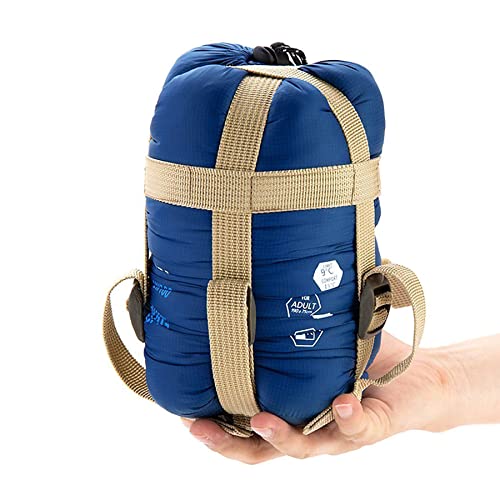
Best for: Summer camping and backpacking trips
The ECOOPRO Warm Weather Sleeping Bag is a lightweight envelope-style bag for mild outdoor conditions. It measures 83 inches long by 30 inches wide, giving most adults a simple, roomy sleep surface. The nylon outer shell is listed as waterproof, while the 100% polyester lining is designed to feel breathable against skin. Its temperature range is about 55 to 60°F, so this bag fits summer nights better than cold-weather camping.
Packing is one of its strongest features. The bag weighs about 1.7 pounds and compresses into a sack measuring roughly 11 inches high. That size can save space in a hiking pack or car camping bin. A smooth zipper allows entry from the side, and the bag can also open flat for use as a basic camping blanket. At around $25, it offers a low-cost option for occasional trips, scouts, festivals, or guest use. The 30-inch width may feel narrow for larger adults, and the thin warm-weather design is not suited to freezing temperatures.
Pros
- Lightweight at about 1.7 pounds for backpacking and hiking.
- Waterproof nylon shell helps block light moisture outdoors.
- Opens flat and works as a sleeping bag or camp blanket.
Cons
- The 55 to 60°F rating limits it to mild weather.
- A 30-inch width may feel tight for broad sleepers or restless sleepers.
1. MalloMe Sleeping Bags for Adults and Kids

Best for: summer camping and family trips
This MalloMe sleeping bag is made for spring, summer, fall, and cool-weather camping. It has a listed temperature range of 50°F to 77°F and fits adults up to 6 feet tall. At around 3 pounds, it remains manageable for car camping, hiking, and shorter backpacking trips. The price, around $26, also makes it a practical choice for families buying several bags.
The outer shell uses a waterproof hex-pattern fabric with double-layer S-shaped stitching. Inside, 3D synthetic fiber fill adds insulation without down’s higher care demands. A compression sack with straps makes storage and transport easier. The bag also includes two-way zippers, a head-area drawstring, and a Velcro strap that helps limit zipper movement. For cleanup, you can wipe the shell with a damp cloth or machine-wash the bag when it gets heavily soiled. Its adult length can work for older children, though younger kids may find it roomy.
Pros
- Covers mild conditions from 50°F to 77°F.
- Waterproof shell helps resist damp ground and light moisture.
- Includes a compression sack with carrying straps.
Cons
- The 50°F rating is not suitable for freezing temperatures or winter camping.
- At about 3 pounds, it is heavier than many backpacking sleeping bags.
Buying Guide
For stomach sleepers, the most important factor is shoulder and hip room. A narrow mummy bag can restrict leg movement and force your knees or hips into an uncomfortable position.
- Shape and fit: Choose a roomier mummy or semi-rectangular bag with at least 24 inches of hip width. Extra space helps you turn onto your stomach without compressing the insulation.
- Temperature rating: Select a bag rated 10°F colder than the lowest temperature you expect. For three-season trips, a 20°F bag often offers a useful balance of warmth and weight.
- Weight and packed size: Aim for 2 to 3.5 pounds and a packed length under 15 inches. Heavier bags can make long climbs tiring, while oversized models consume pack space.
- Insulation type: Down usually weighs less and compresses smaller, but synthetic fill keeps insulating better when damp. Pick treated down for dry climates or synthetic fill for wet conditions.
- Zipper and foot room: A two-way zipper lets you vent your torso, and a footbox at least 12 inches wide gives your ankles room to move. Check that the zipper opens smoothly from inside.
If you cannot have everything, prioritize a roomy cut, because restricted movement can ruin sleep faster than a few extra ounces.
Frequently Asked Questions
How do stomach sleepers choose a backpacking sleeping bag?
Stomach sleepers should choose a backpacking sleeping bag with a roomy footbox, low-profile hood, and enough shoulder space to avoid pressure. Look for a mummy or semi-rectangular cut that allows your feet to angle outward. A shoulder girth near 60 to 64 inches often gives more room than a narrow alpine model.
What sleeping bag shape works best for stomach sleepers on backpacking trips?
Down insulation is usually the best choice for stomach sleepers who prioritize low pack weight and warmth, while treated down or synthetic fill suits damp trips better. A 20-degree bag may weigh about 2 to 3 pounds, but packed size, moisture resistance, and your expected overnight temperatures matter as much as fill type.
Can stomach sleepers use a mummy bag for backpacking?
Yes, stomach sleepers can use a mummy bag if it has a broad shoulder and hip cut, plus a footbox that lets the ankles rotate. A model with 60 inches of shoulder room and a 14-inch footbox can feel less restrictive than a narrow racing cut.
Are wide sleeping bags better for stomach sleepers outdoors?
Yes, wide sleeping bags are often more comfortable for stomach sleepers, especially if you shift positions during the night. Compare the bag’s shoulder and hip measurements with your body, not just its listed width. An extra 4 to 8 inches of room can reduce fabric pulling around bent knees.
Conclusion
MalloMe Sleeping Bags for Adults and Kids is the top pick for stomach sleepers who want a flexible, budget-friendly bag for casual backpacking, car camping, and family trips. If your priority is lower pack weight or colder overnight temperatures, choose a purpose-built backpacking mummy bag instead, since it usually packs smaller and provides a clearer temperature rating. Before buying, double-check the bag’s size against your height and shoulder room, confirm compatibility with your sleeping pad and planned conditions, verify how many bags the package includes, and compare the current price across retailers. A stomach sleeper should also check zipper placement and foot space, because cramped legs can ruin an otherwise comfortable night outdoors.

