
Among the best camping beds for bad backs, the CYMULA Memory Foam Camping Mattress Pad is the top pick for most buyers because its memory foam cushioning can provide pressure relief without the bulk of a full camp bed.
This guide is for campers who wake with sore hips, shoulders, or lower backs after sleeping on thin ground. When comparing a padded sleep surface, the key factors are foam thickness, overall size, packed dimensions, and the cover’s durability and cleanability. The six picks below are ranked with clear reasons and honest drawbacks for each, so you can match comfort needs with tent space and transport limits. That balance matters when car space is limited.
Quick Comparison
| # | Product | Best For | Price | |
|---|---|---|---|---|
| 1 | CYMULA Memory Foam Camping Mattress Pad | Side Sleepers Needing Extra Cushion | ~$57 | View → |
| 2 | Coleman ComfortSmart Big & Tall Cot | Taller Campers Wanting More Room | ~$100 | View → |
| 3 | HABUTWAY Camping Cot with Mattress | Cot Campers Seeking Added Comfort | ~$120 | View → |
| 4 | Wevelel Memory Sleeping Pad | Lightweight Backpacking Sleepers | ~$43 | View → |
| 5 | CYMULA Camping Mattress Pad | Guest Bed Replacement Shoppers | ~$56 | View → |
| 6 | CYMULA Camping Mattress Pad | Car Campers Wanting Plush Padding | ~$69 | View → |
6 Camping Beds That Support Sore Backs
The list is ranked by comfort, support, and portability, counting down to the top pick for painful backs.
6. CYMULA Camping Mattress Pad

Best for: Car campers needing extra cushioning
This CYMULA camping mattress pad uses 3-inch high-density memory foam for tent floors, SUV beds, guest rooms, and sleepovers. The foam is designed to respond to body weight, giving more support than a thin sleeping bag or basic foam roll. Around $69, it costs more than many simple sleeping pads, but it also works as a temporary floor bed at home.
Seven sizes are available, from a 63-by-26-inch small option to a 60-by-80-inch queen. Other choices include single, twin, twin XL, and full sizes. A fleece cover, storage bag, and packing straps come with the mat. Its bottom has waterproof, non-slip fabric, which can help keep the pad in place on damp tent floors or smooth vehicle surfaces. Since the mattress arrives vacuum-packed, it needs 24 to 72 hours to expand. The listed 3-inch thickness may not fully return during that period.
Pros
- High-density memory foam offers more cushioning than a thin sleeping pad.
- Seven size options fit solo sleepers, guests, vehicles, and larger beds.
- Waterproof, non-slip fabric helps protect the underside and limit movement.
Cons
- The bulky foam design takes more storage space than an air mattress.
- Full expansion can take up to 72 hours, and the mattress may not reach its listed thickness.
5. CYMULA Camping Mattress Pad

Best for: Car campers wanting extra cushioning
The CYMULA camping mattress pad is a roll-up floor mat made with high-elasticity memory foam and a supportive sponge layer. It cushions hard tent floors, truck beds, sofas, and guest-room floors better than a thin foam sleeping pad. The breathable fabric cover is designed for use in all seasons, while the foam may help absorb odors. It costs around $56, depending on the seller and current pricing.
Its practical design makes it useful beyond camping. The cover unzips for machine washing, and the underside combines a waterproof surface with rubberized grip dots. Bottom straps help hold the pad on a camping bed, sofa, or other surface. It can also work as a temporary guest mattress, play mat, pet bed, yoga surface, or back-seat cushion. Multiple size options are available, but the listed details do not give the exact dimensions or foam thickness. That information matters when choosing a fit for a tent or vehicle.
Pros
- Memory foam and support foam provide more cushioning on hard floors.
- Removable, machine-washable cover simplifies routine cleaning.
- Non-slip dots, waterproof backing, and straps help limit shifting.
Cons
- Exact dimensions and thickness are not provided in the listed specifications.
- It rolls for storage, but it will take more space than a thin camping pad.
4. Wevelel Memory Sleeping Pad

Best for: Car campers wanting extra cushioning
The Wevelel Memory Sleeping Pad is a self-inflating foam mattress for tents, cars, and guest use. It measures 77 by 26.98 inches and reaches 3.1 inches thick when filled. Its 50D memory foam is denser than many basic camping pads, which should provide steadier support and reduce pressure on hips and shoulders. The surface uses stretch-knit fabric rather than slick nylon, so it should feel quieter against sleeping bags.
Setup takes some attention, but the process is quick. Open the three valves and let the mat expand for about 10 seconds. Then close two valves and step on the remaining inlet for roughly 20 seconds. For packing, opening only the first valve lets air escape while the second stays closed. The pad has a listed R-value of 9.5 for strong ground insulation, though comfort also depends on weather and sleeping gear. At 6.59 pounds, it suits car camping better than long backpacking trips. Around $43, it offers substantial cushioning for the price.
Pros
- 3.1-inch thickness helps separate sleepers from hard, uneven ground.
- 50D foam and a 26.98-inch width provide supportive cushioning.
- R-value of 9.5 offers insulation for colder ground conditions.
Cons
- At 6.59 pounds, it is heavy for backpacking or long hikes.
- The nearly 27-inch width may feel narrow for larger sleepers.
3. HABUTWAY Camping Cot with Mattress
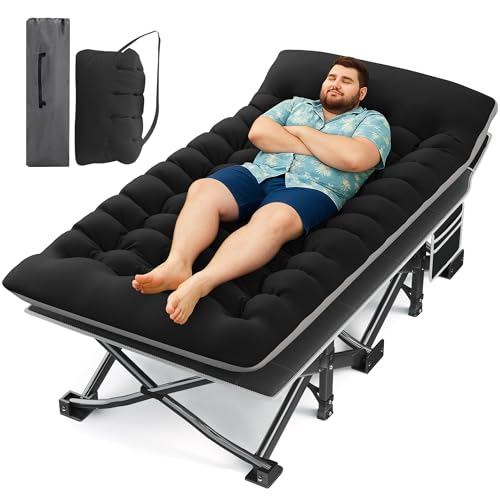
Best for: Roomy car camping and RV naps
The HABUTWAY camping cot is a wide folding bed for adults who dislike narrow sleep surfaces. It measures 32 by 75 inches when open, with 13.8 inches of clearance underneath. A carbon-steel X-frame and 10 nonslip legs support up to 600 pounds, according to the listed specifications. The cot weighs 17.4 pounds and folds to 41 by 10 by 7.5 inches for storage or transport.
Its main advantage is the included 2.5 to 3-inch mattress. The velvet-covered pad attaches to the frame, so it should shift less during use, and it rolls up with the cot. Since the mattress arrives compressed, it needs repeated kneading and several hours to regain its full shape. An 18-degree raised head section may feel more comfortable for reading or resting, while the side pocket holds small items such as glasses or a phone. Around $120, it costs more than a basic cot, but the extra width and pad add useful comfort for camping, patios, and office naps.
Pros
- The 32-inch width gives adults more room than standard narrow cots.
- The included mattress adds cushioning without requiring a separate sleeping pad.
- The folding frame and carry bag simplify storage for RV trips or camping.
Cons
- At 17.4 pounds, it is heavy for longer hikes or backpacking.
- The 75-inch length may feel short for taller adults, and the mattress needs time to expand before use.
2. Coleman ComfortSmart Big & Tall Cot

Best for: Taller campers needing raised sleeping space
The Coleman ComfortSmart Big & Tall Cot is a folding steel camp bed with an elevated sleeping surface. It supports up to 300 pounds and is designed for campers up to 6 feet 6 inches tall. The frame folds for transport and should fit in most car trunks, making it useful for camping, beach trips, festivals, tailgating, or overnight guests. At around $100, it costs more than a basic camping cot but includes a mattress pad.
Comfort comes from a coil suspension system beneath a thick foam pad, which should feel less rigid than bare fabric. The feature list also describes a leak-proof air mattress, so buyers should confirm whether that refers to the included sleeping surface or a separate version. Pull-out side tables with cup holders provide room for a drink, phone, or flashlight. A one-year limited warranty adds some coverage, but the 300-pound capacity remains a firm limit. Taller users may appreciate the extra length, while shorter campers may find the large footprint less convenient indoors.
Pros
- Steel frame supports up to 300 pounds.
- Six-foot-six-inch length suits taller sleepers.
- Folding design fits most car trunks.
Cons
- The 300-pound weight limit excludes some users and heavy bedding setups.
- The listed air-mattress details may be unclear beside the foam pad, so check the included configuration before buying.
1. CYMULA Memory Foam Camping Mattress Pad
Best for: Car campers wanting foam comfort
The CYMULA camping mattress pad is a 3-inch memory foam sleeping surface for tents, SUVs, cots, and indoor floor use. Its high-density foam is designed to respond to body weight, while the fleece cover adds a softer contact layer than a bare sleeping pad. Around $57, it costs more than basic foam mats but can also work as a temporary guest bed.
Seven size options cover several sleeping setups, from a 63-by-26-inch compact pad to a 60-by-80-inch queen. The 75-by-38-inch twin and 80-by-38-inch twin XL sizes may suit solo campers who want extra width. A waterproof, non-slip bottom helps keep the pad in place on tent floors and protects it from damp ground. A storage bag and packing straps are included. Because the foam arrives vacuum-packed, it needs 24 to 72 hours to expand. The listed CertiPUR-US certification may appeal to buyers who want a certified foam product, but the pad still requires enough storage space when unrolled.
Pros
- Memory foam provides more cushioning than a thin sleeping mat.
- Seven sizes support tents, vehicles, guest rooms, and floor beds.
- Waterproof, non-slip backing and included straps suit travel use.
Cons
- The pad needs up to 72 hours to regain its full 3-inch shape.
- Memory foam is bulkier than an air mattress when packed and stored.
Buying Guide
The most important factor is even, firm support across your hips and lower back. A sagging cot or thin pad can leave your spine bent for six to eight hours.
- Support system: Choose a taut cot with center bars, or pair it with a 2- to 4-inch foam pad. Avoid fabric that dips more than 1 inch under your hips.
- Sleeping size: Look for at least 25 inches of width and 75 inches of length. A 30-inch-wide model gives restless sleepers more room.
- Bed height: A 16- to 20-inch height makes getting in and out easier than a low, 8-inch mattress. Check the height with the pad installed.
- Weight capacity: Select a frame rated at least 50 pounds above your body weight. This leaves room for bedding and reduces frame flex.
- Setup and transport: Favor beds that open in under five minutes and fold below 40 inches. Keep packed weight near 20 pounds or less if you carry gear far.
If you cannot have everything, prioritize a level, supportive surface over low weight or a smaller packed size.
Frequently Asked Questions
How do I choose a camping bed for a bad back?
Choose a camping bed with firm, even support, a stable frame, and enough length for your body. Look for a cot with a tensioned sleeping surface and a mattress pad around 2 to 4 inches thick. Avoid sagging fabric, narrow frames, and thin air mattresses that lose support overnight.
What type of camp bed is easiest on your back?
A sturdy cot with a supportive foam pad is usually easiest on your back because it keeps your spine from sinking into uneven ground. Pick a frame rated above your body weight, with a sleeping width of at least 25 inches. Foam adds cushioning without the bounce of an air bed.
Can a camping mattress help with lower back pain?
A camping mattress can reduce lower back discomfort when it supports your hips and shoulders without letting them sink too far. Choose medium-firm foam or an adjustable air mattress, then add a 1-inch topper if needed. Test the setup at home for one night before taking it outdoors.
Are folding cots better than air mattresses for back support?
Folding cots often provide more consistent back support than air mattresses because their frames keep the sleeping surface raised and stable. Pair one with a 2-inch foam pad for comfort. Air beds can still work, but temperature changes may alter firmness during a cold night.
Conclusion
The CYMULA Memory Foam Camping Mattress Pad is the top recommendation for campers who need softer cushioning and pressure relief on hard tent floors. If your priority is easier access and more clearance from cold ground, pick a sturdy folding cot instead, especially one with a supportive sleeping surface. Before buying, double-check the pad or cot’s dimensions, compatibility with your tent and existing sleeping system, quantity included, and current price. A thicker pad can improve comfort, but it may take more space in your vehicle and leave less room inside a smaller tent. Also consider packed weight if you will carry gear to a remote campsite. The right choice should support your back without creating a transport problem.

