
SoftStartRV NetworkRV RV AC Soft Start Kit is the top pick for most buyers because it reduces an RV air conditioner’s startup surge, making generator-powered cooling easier. For shoppers comparing the best generator for rv air conditioner, this electrical add-on is a practical place to start. It helps compatible rooftop units start with less demand instead of requiring a larger power station. Check your air-conditioner model before buying.
This guide is for RV owners choosing power for summer trips, campsites, or backup cooling. Focus on starting watts, running watts, fuel capacity, and noise, then match those numbers to your AC and other appliances. The five picks below are ranked with reasons and honest drawbacks for each, so you can compare portable generators and power options without guessing.
Quick Comparison
| # | Product | Best For | Price | |
|---|---|---|---|---|
| 1 | SoftStartRV NetworkRV RV AC Soft Start Kit | Campground Power-Conscious RV Owners | ~$295 | View → |
| 2 | Micro-Air EasyStart Flex 398 Soft Start Kit | Established-Brand Soft Start Shoppers | ~$399 | View → |
| 3 | RV Soft Start Air Conditioner Kit | Basic Kit Comparison Shoppers | ~$60 | View → |
| 4 | Aoteda RV Air Conditioner Soft Start Kit | DIY RV Maintenance Buyers | ~$83 | View → |
| 5 | Spartan Power SpartanStart Soft Start Kit | Spartan Power Product Fans | ~$189 | View → |
5 Generators That Can Run an RV Air Conditioner
These picks are ranked by RV cooling capability, power output, portability, and value, counting down to the top choice.
5. Spartan Power SpartanStart Soft Start Kit

Best for: RV owners running AC on inverters
SpartanStart is a soft-start module for RV air conditioners up to 20,000 BTU. It is designed to reduce the initial compressor load, allowing compatible units to start with a 2,200-watt inverter or generator. That can help limit battery drain during off-grid cooling. The unit is made in Australia and includes US-based support.
The kit includes one starter, six splice connectors, a cleaning wipe, and two strips of automotive-grade mounting tape. Installation uses three connections for the compressor’s R, C, and S wires, so access to the air conditioner’s wiring is required. It also includes generator anti-stall and preload functions, automatic switching between generator, inverter, and campsite power, plus motor-reversal protection after short outages. No learning cycle is required. Around $189, the price is higher than basic electrical accessories, but the three-year warranty adds useful coverage.
Pros
- Supports RV AC units up to 20,000 BTU with a 2,200-watt inverter or generator.
- Helps reduce compressor startup demand, which may ease battery strain.
- Includes connectors, cleaning wipe, mounting tape, and a three-year warranty.
Cons
- Installation requires identifying and connecting the compressor’s R, C, and S wires.
- A 2,200-watt power source may not suit every RV AC setup or other onboard loads.
4. Aoteda RV Air Conditioner Soft Start Kit

Best for: RV owners with limited shore power
The Aoteda RV soft starter reduces an air conditioner’s startup current by a claimed 65% to 70%. That lower surge can help prevent generator overloads, breaker trips, and short-cycle issues. The listing says it can start a 2,200-BTU air conditioner with a 15,000-watt generator, while leaving capacity for a refrigerator, microwave, fans, or television. Around $83, it costs less than replacing a working generator with a larger model.
This kit uses a dust-resistant ABS plastic case, upgraded capacitors, and a circuit board with overload and short-circuit protection. Its five color-coded wires and included wiring diagram should simplify setup, but installation still requires access to the air conditioner’s electrical components. The unit is rated for use with a 20-amp domestic connection. On a 30-amp connection, two air conditioners require two soft starters. The waterproof, oxidation-resistant wiring harness adds useful protection in an RV environment. The stated 2,200-BTU and 15,000-watt figures deserve careful checking, since they may not match your equipment.
Pros
- Cuts claimed startup current by 65% to 70%, which may reduce breaker trips.
- Supports one air conditioner on a 20-amp connection.
- Includes overload protection, short-circuit protection, and a five-wire harness.
Cons
- Installation involves RV electrical wiring and may require a qualified technician.
- Compatibility and performance claims need confirmation for your specific air conditioner, generator, and connection.
3. RV Soft Start Air Conditioner Kit

Best for: RV owners with limited electrical service
This soft-start module is designed for compatible 110V, 60Hz rooftop air conditioners in campers, travel trailers, fifth wheels, and motorhomes. It manages the compressor’s initial power demand more gradually, which can help reduce voltage dips, light flicker, breaker trips, and loud startup sounds. The unit does not change the air conditioner’s normal running-watt requirement, but it can make startup easier for shore power, household service, or a properly sized generator.
The compact design fits inside the rooftop AC compartment and includes a built-in capacitor, five color-coded leads, a printed wiring diagram, and status indicators. Those details can make setup and basic troubleshooting more organized, though installation still requires access to the air conditioner’s electrical compartment. One module is needed for each AC unit. At around $60, it offers a lower-cost way to improve startup behavior without replacing the rooftop system. Compatibility matters most, so buyers should confirm the unit’s voltage, frequency, and wiring before ordering.
Pros
- Gradually manages compressor startup demand, which may reduce flicker and nuisance breaker trips.
- Works with shore power, household service, or a properly sized generator.
- Includes five color-coded leads, a wiring diagram, and status indicators.
Cons
- It only fits compatible 110V, 60Hz rooftop AC systems, so some units may be excluded.
- Each air conditioner needs its own module, and installation requires work inside the rooftop AC compartment.
2. Micro-Air EasyStart Flex 398 Soft Start Kit

Best for: Homes and RVs using backup generators
The MICRO-AIR EasyStart Flex 398 is a soft-start module for residential and RV air conditioners. It reduces compressor startup current by up to 75%, which can help prevent breaker trips and reduce heavy demand on a generator. The unit supports single-stage, two-stage, and heat pump systems from 2 to 6 tons, so it fits more than small rooftop RV units.
Its four-wire, color-coded connection is simpler than many HVAC electrical projects, and Micro-Air provides step-by-step video guidance. Bluetooth diagnostics add useful status and fault information through a phone. The built-in protection system can shut down the starter when it detects certain problems. Startup should also produce fewer compressor clunks, light flickers, and voltage dips. At around $399, this is a sizable purchase, but it may cost less than upgrading to a larger generator. Confirm system compatibility before ordering, especially for older equipment or unusual wiring.
Pros
- Cuts locked-rotor startup current by up to 75%, which may reduce breaker trips.
- Supports 2- to 6-ton air conditioners, heat pumps, and two-stage systems.
- Bluetooth diagnostics and fault protection help with setup and troubleshooting.
Cons
- Around $399, it costs far more than basic capacitor-based startup aids.
- Installation requires access to the outdoor electrical compartment, and some homeowners may need an HVAC technician.
1. SoftStartRV NetworkRV RV AC Soft Start Kit
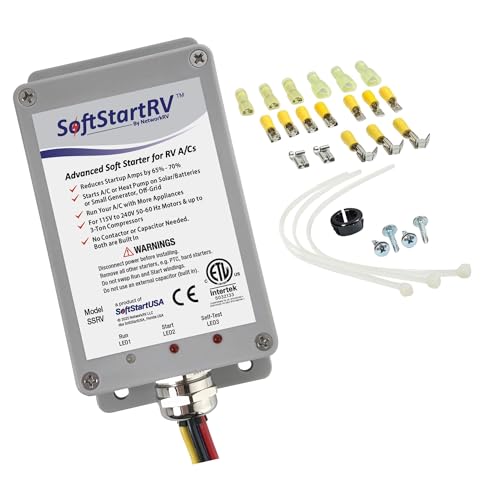
Best for: RV owners using smaller generators
SoftStartRV is an add-on module for rooftop RV air conditioners. It reduces the compressor’s initial power spike, so the unit can start with less strain on a generator or campground circuit. The product is now 40% smaller, according to the manufacturer, which helps it fit low-profile air-conditioning units. Its housing is rated as 100% waterproof.
The system is designed to start two air conditioners on a 30-amp connection, or one unit from a 15-amp outlet or 2,200-watt generator. SoftStartRV says that setup can support air conditioners up to 36,000 BTUs, including a 15,000-BTU rooftop model, though actual performance depends on the generator and other appliances running at the same time. It may also reduce compressor thumps, vibration, and startup noise. Installation guides, video tutorials, and live help from certified technicians are included. Around $295, it carries a 30-day satisfaction guarantee.
Pros
- Helps a 2,200-watt generator start one RV air conditioner.
- Compact design fits low-profile rooftop units.
- Waterproof housing suits exposed rooftop installation areas.
Cons
- Around $295, it costs far more than basic electrical start components.
- Generator results vary with air-conditioner size and other loads, so full RV power may still require a larger generator.
Buying Guide
Most important factor is surge capacity, because an RV air conditioner can need far more power at compressor startup than during normal cooling. Choose a unit whose starting-watt rating exceeds the air conditioner’s demand, not just its running wattage.
- Starting and running watts: A 13,500-BTU rooftop unit commonly needs about 3,000 to 4,000 starting watts and 1,200 to 1,800 running watts. Check the AC label and add 20% headroom.
- Inverter output: Pure sine-wave power is the safer choice for sensitive electronics, including laptops, televisions, and RV battery chargers. A 30-amp, 120-volt RV outlet also avoids improvised adapters.
- Fuel and runtime: Gasoline models cost less, while dual-fuel units offer propane backup. Look for at least 8 hours at 25% load, or a 5-gallon tank for overnight use.
- Noise level: Campgrounds often enforce 60 dB limits. Target 60 dB or less at 23 feet, especially if you plan to run the cooler after bedtime.
- Weight and service: Units under 100 pounds are easier to move. Confirm wheel and handle quality, oil-change access, and a warranty lasting at least two years.
If you must compromise, prioritize verified starting-watt capacity, since an undersized machine may shut down whenever the compressor begins.
Frequently Asked Questions
How many watts does an RV air conditioner need from a generator?
An RV air conditioner usually needs a generator rated at 3,000 to 4,000 running watts, with enough surge capacity for startup. A 13,500-BTU unit often runs near 1,500 watts but may demand more briefly when its compressor starts. Inverter models with a 30-amp RV outlet are usually the easiest match.
What size generator will run a 15,000-BTU RV air conditioner?
A 3,000-watt inverter generator may run one 15,000-BTU RV air conditioner, but a 3,500- to 4,000-watt model provides safer headroom. The larger option can also handle a refrigerator, battery charger, or small appliance. Always compare the air conditioner’s starting watts with the generator’s peak output before buying.
Can a 2,000-watt generator run an RV air conditioner?
A 2,000-watt generator can run some RV air conditioners only when the unit has a soft-start device and other electrical loads are off. Standard compressors may exceed that generator’s startup capacity, even if their running draw looks acceptable. Check the air conditioner’s label and the generator’s running and peak-watt ratings before connecting.
Are inverter generators better for running RV air conditioners?
Inverter generators are usually better for RV cooling because they produce cleaner power, run quieter at lower loads, and adjust fuel use as demand changes. A model rated around 60 decibels at 25 feet is less intrusive at a campsite, but its 30-amp outlet and continuous wattage still need to match the air conditioner’s requirements.
Conclusion
SoftStartRV NetworkRV RV AC Soft Start Kit is the top pick for RV owners with one rooftop air conditioner who want easier startup from a modest generator or campground hookup. If your priority is powering the air conditioner alongside a refrigerator, microwave, or other high-draw devices, choose a properly sized inverter generator instead, since a soft-start kit reduces startup demand but does not add running wattage. Before buying, double-check the kit’s size, your air conditioner’s compatibility, the quantity needed for your RV, and the current price, because model fit, package contents, and listings can vary. Also confirm whether installation requires electrical experience or professional help for your particular RV.

